
Luxury Home Renovation Before and After: How One Livingston, NJ Transformation Proves Why Builders Need Visual Strategy
A Livingston, NJ case study in why luxury custom home builders need more than finished photos. They need a visual strategy.
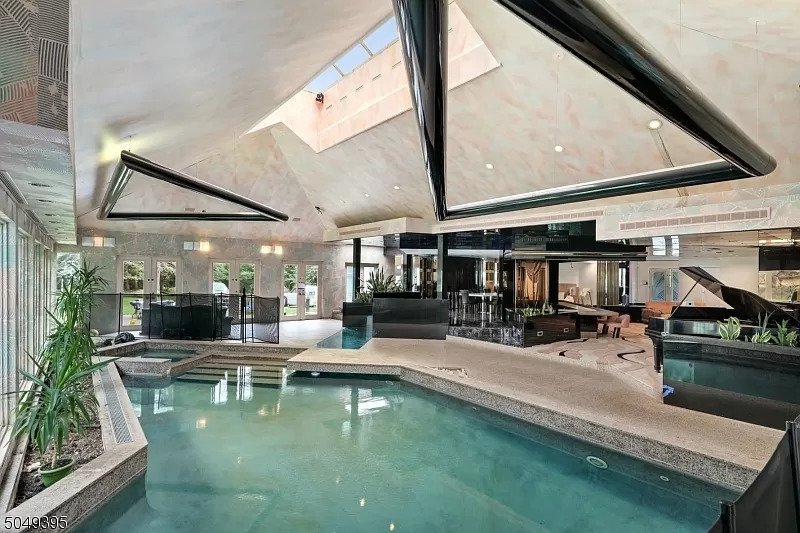
Before: The indoor pool pavilion. Angular mirrored skylights, granite surrounds, pink stone walls, and dark metallic beams. An impressive feature by any standard, but one whose material palette and visual density made the space feel heavy and enclosed despite its volume.
The Work Was Remarkable. But That Was Never the Problem.
There is a particular kind of frustration that sits quietly inside the luxury custom home building industry. It rarely gets talked about openly, but it shapes outcomes more than most builders realize.
The frustration is this: a builder completes an extraordinary residential transformation. Months, sometimes years, of precision craftsmanship and design coordination result in a finished product that is genuinely remarkable. The client is thrilled. The subcontractors are proud. The team knows, with certainty, that this project represents some of the best work they have ever delivered.
And then the project is documented with a phone, a few quick walkthroughs, and a handful of images that capture the rooms but miss the story entirely.
The work was never the problem. The translation was.
This is the gap that separates builders who are respected by their existing clients from builders who are chosen by the next ten. It is the difference between a completed project and a proof asset. Between a renovation and a reputation.
This article is about that gap. And it is about a specific project in Livingston, New Jersey, that makes the case more clearly than almost any other we have encountered.
The Property: A Study in Dramatic Contrast
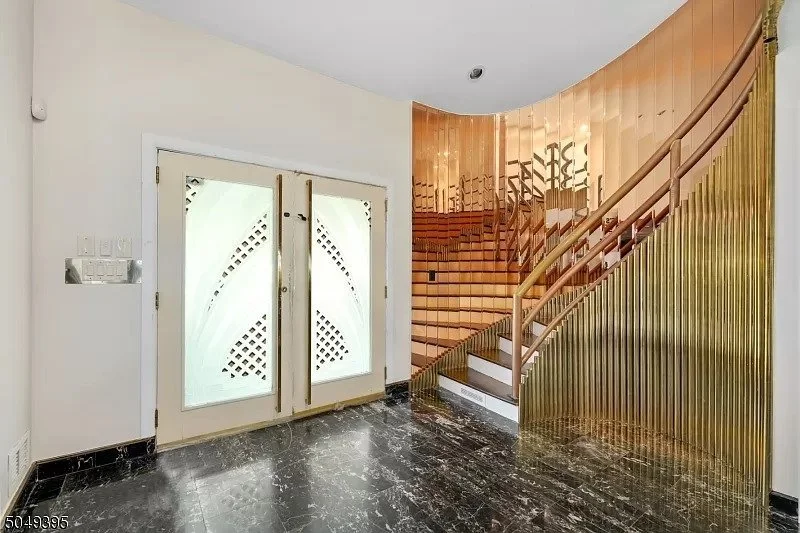
Before: The original entry sequence. Curved copper staircase, brass rod spindles, and polished black marble set the tone for a home built around a 1980s vision of luxury. Bold for its era, but a visual language that no longer translates.
Before renovation, this Livingston residence was a bold expression of a very specific era. The home was a custom contemporary build rooted firmly in the 1980s, carrying all the hallmarks of that period's high-end residential aesthetic: angular architecture, dramatic interior volumes, and a heavy reliance on materials that announced themselves loudly.
The foyer featured a curved staircase with polished copper and brass rod spindles set against black marble flooring. The living areas were defined by mirrored ceilings, wave-pattern carpeting in muted peach tones, and a bar area overlooking an indoor pool. Throughout the home, the material palette leaned into reflective surfaces, ornamental metalwork, checkered patterns, and theatrical lighting.
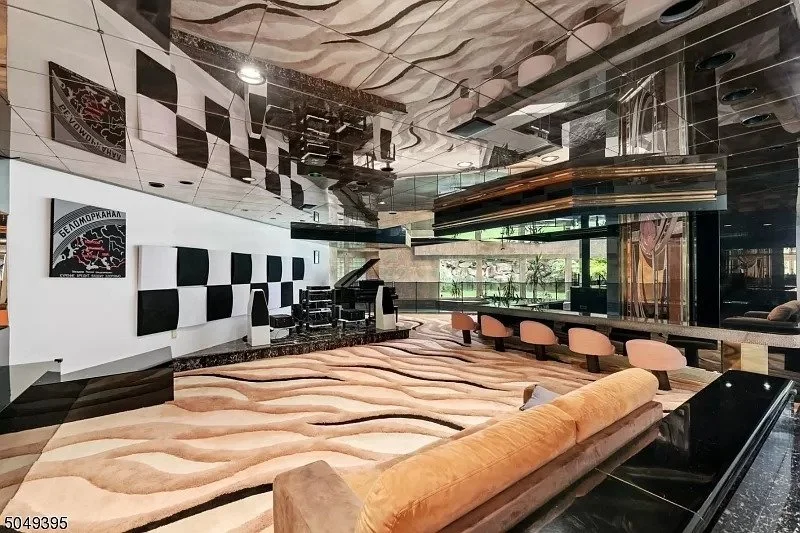
Before: The primary living and entertaining area. Mirrored ceiling panels, checkered surfaces, wave-pattern carpeting, and a grand piano overlooking the pool level. A room designed to impress, but rooted in an aesthetic that now works against the home's perceived value.
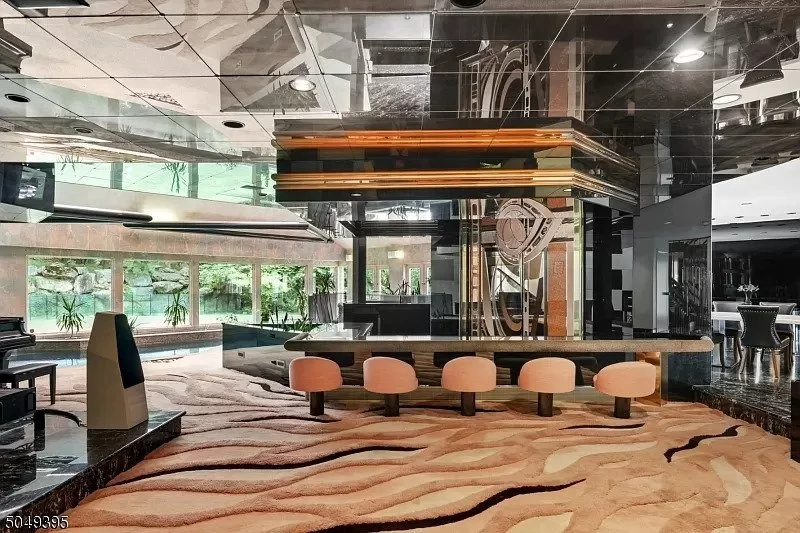
Before: The bar area from the entertainment level. Pink upholstered stools, mirrored ceiling planes, and wave-pattern carpet continue throughout. Every surface is competing for attention in a way that reads as visual weight rather than visual confidence.
None of this is a criticism of the original home. In its time, it was a significant property. But its visual identity had become its limitation. The interiors told one story, and that story no longer aligned with how a modern luxury buyer perceives value, comfort, or refinement.
This is where the renovation enters. And this is where the case study truly begins.
The Transformation: Not a Refresh. A Re-Authoring.
What happened to this property was not a cosmetic update. It was a complete re-authoring of the home's identity.
Every surface, every material choice, every spatial relationship was reconsidered. The renovation stripped away the heavy, reflective, era-specific layers and replaced them with a design language built on warmth, openness, natural light, clean lines, and a material palette that communicates calm confidence rather than visual intensity.
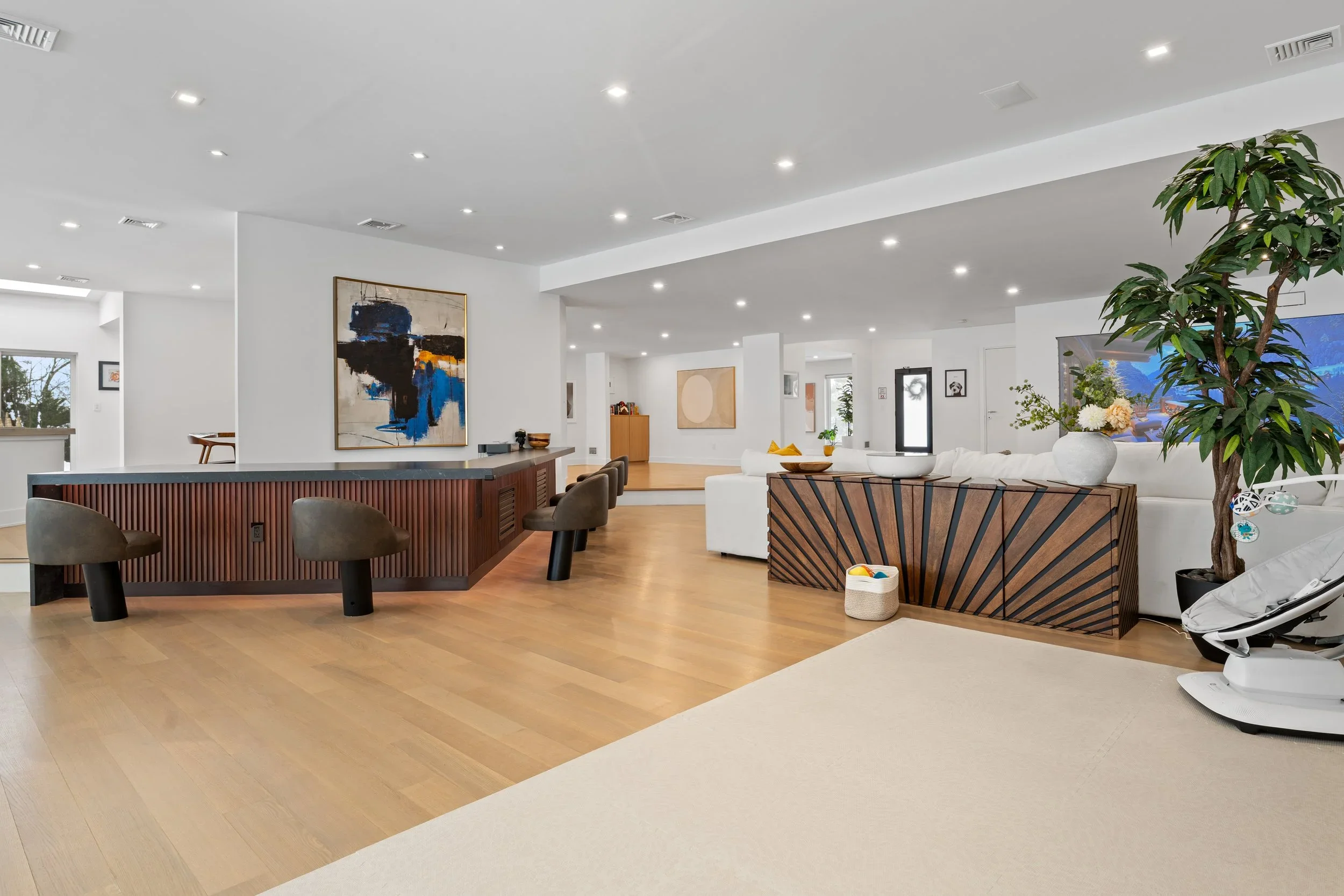
After: The main living level, redefined. Warm hardwood floors, a ribbed wood bar island with sculptural seating, contemporary art, and a spatial openness that the original layout never achieved. The same square footage, now telling a completely different story.
The shift is not subtle. It is total.
Where there were mirrored ceilings and checkered panels, there are now clean white planes and recessed lighting. Where wave-pattern carpet once covered the entertaining spaces, warm hardwood flooring extends through open, flowing rooms. Where brass and copper competed for attention, there is now a restrained palette of natural wood, matte black hardware, and stone.
The indoor pool area alone tells the entire story.
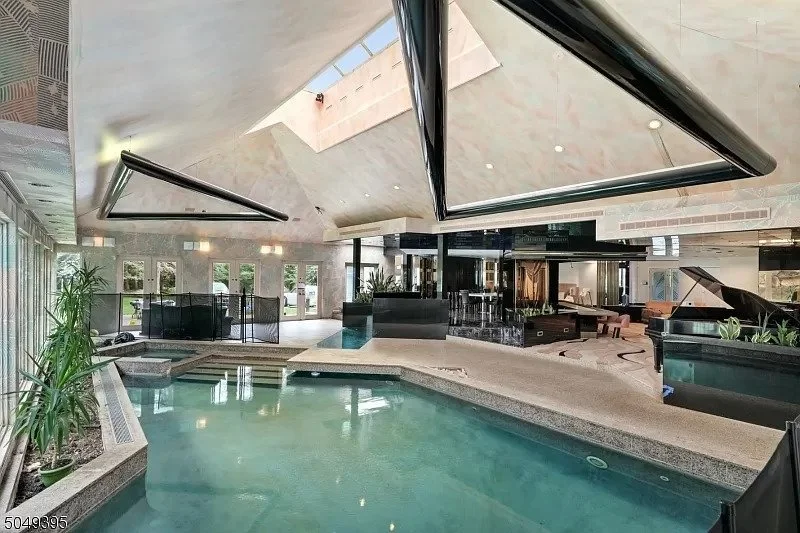
Before: The indoor pool from the main level. Angular mirrored skylights, dark metallic beams, and layered stone surfaces under a vaulted ceiling. The architectural ambition was clear, but the material palette anchored the space to a specific era rather than a timeless standard.
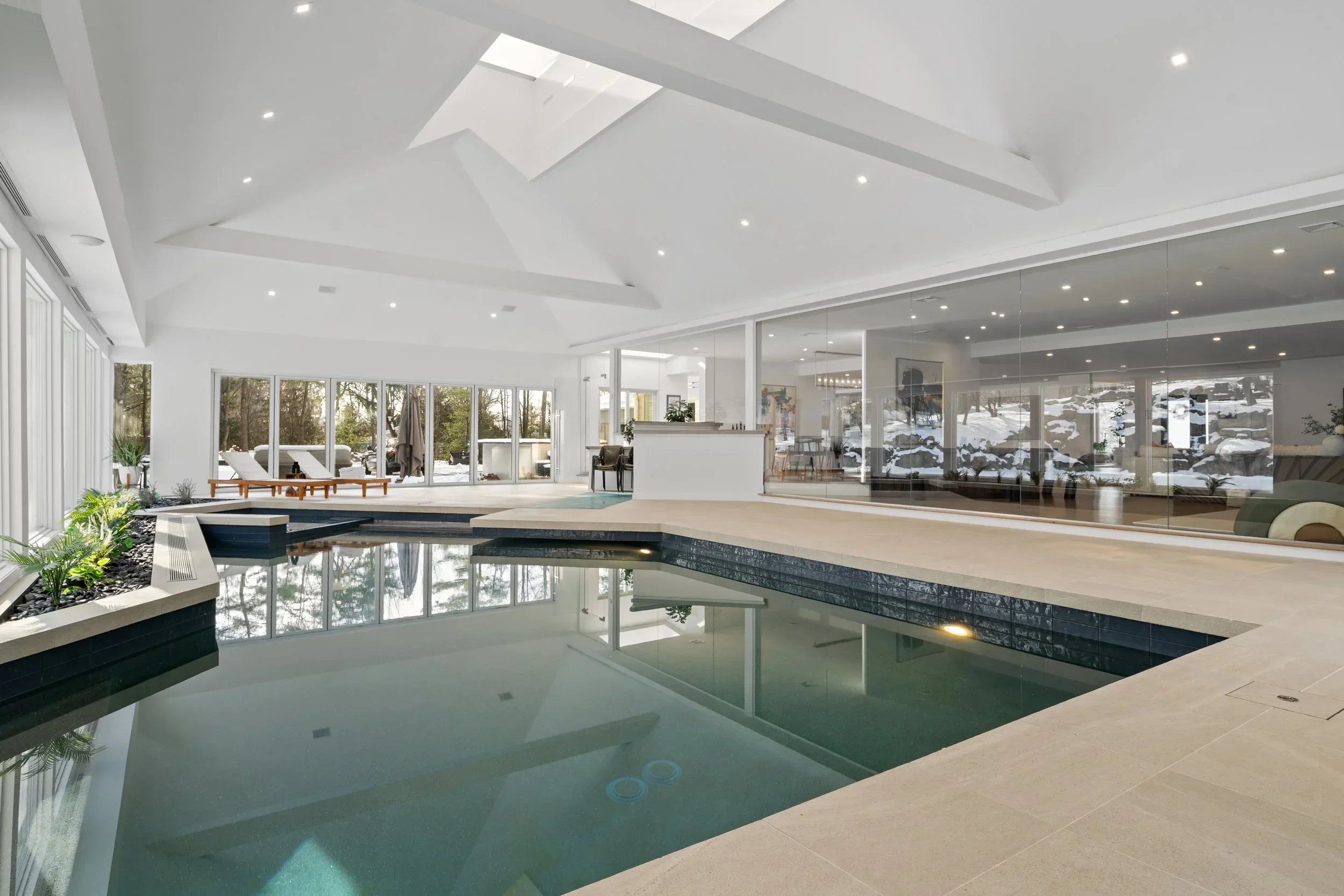
After: The same indoor pool pavilion, entirely re-authored. Bright white vaulted ceilings, clean geometric skylights, dark-tiled pool with underwater lighting, and floor-to-ceiling glass revealing the landscape beyond. This single image captures what strategic renovation looks like when it is documented with equal intention.
Same footprint. Same skylights. Same indoor pool concept. But the experience is entirely different. The before images show a space that is impressive but dated, visually heavy, and difficult to imagine living in comfortably. The after images show a space that is luminous, inviting, and unmistakably modern.
This is the kind of transformation that a luxury custom builder should be known for. And this is exactly the kind of transformation that, without strategic documentation, gets reduced to a few interior shots that never fully communicate the magnitude of what was accomplished.
Why Before-and-After Contrast Is the Most Underused Tool in a Builder's Portfolio
Most luxury custom builders understand the value of showing finished work. Fewer understand the power of showing where a project started.
Before-and-after contrast does something that no single finished image can do on its own: it creates a narrative of transformation. It lets the viewer understand not just what the space looks like now, but what was required to get there. It communicates scope, vision, problem-solving, and the ability to see potential where others might see only limitations.
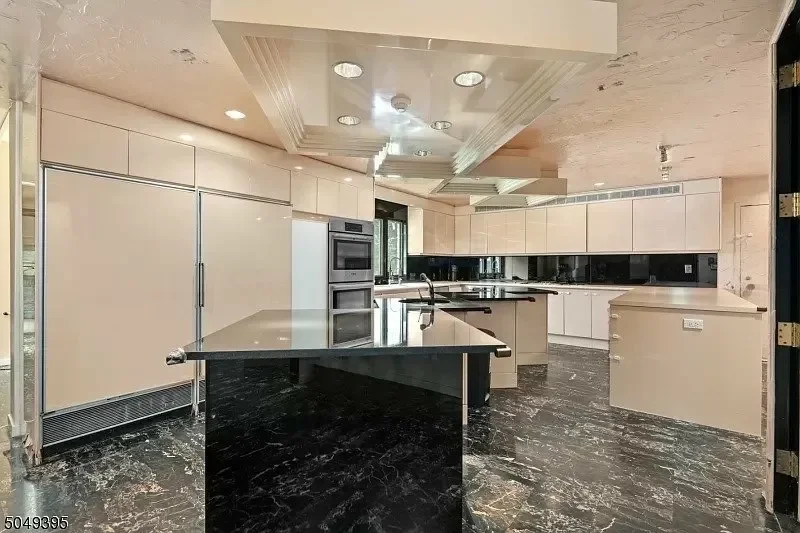
Before: The original kitchen. Black marble flooring, pink-toned cabinetry, a dated lighting soffit, and a layout that feels compartmentalized despite the room's generous proportions. Functional, but far from the open, light-filled kitchens that define premium residential expectations today.
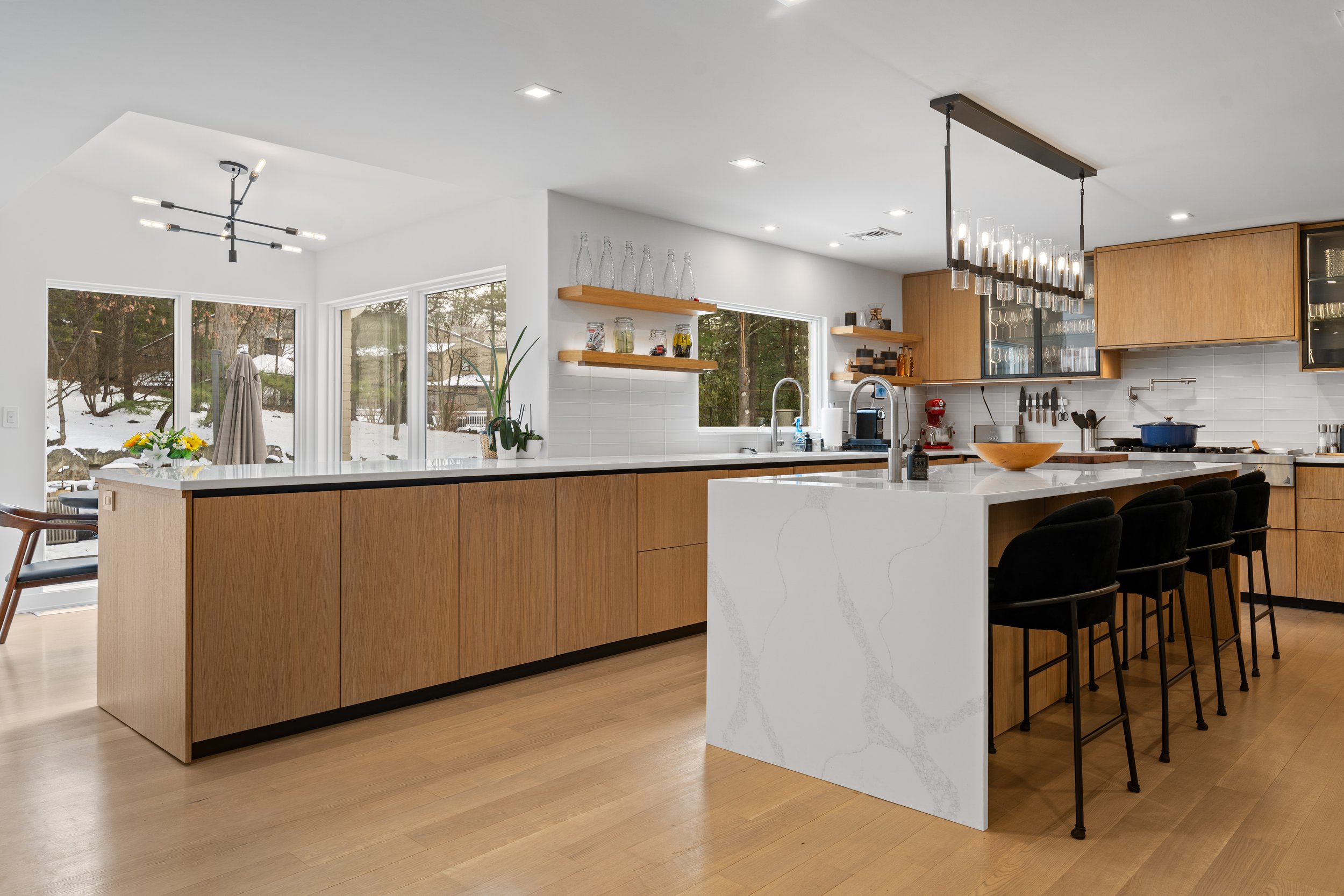
After: The renovated kitchen. White oak cabinetry, a waterfall-edge island with modern pendant lighting, open shelving, and a clean sightline through the space. Where the original kitchen felt enclosed and era-locked, this one feels connected, functional, and unmistakably current.
For a luxury builder, this is not just interesting visual content. It is a trust signal. A prospective client looking at a before-and-after sequence is not simply admiring a beautiful room. They are evaluating the builder's ability to envision, execute, and deliver a transformation that matches their own aspirations.
The before image is the context. The after image is proof. Together, they form an argument that no amount of written copy can replicate.
And yet, most builders skip this entirely. The before photos are either never taken, taken casually with a phone, or buried in a file somewhere and forgotten. The finished photos may be professional, but without the contrast, they lack the narrative weight that turns a portfolio image into a persuasion tool.
This Livingston project makes the point clearly. Consider the original entertaining spaces: mirrored ceilings, neon-lit copper panels, wave-patterned carpet extending across thousands of square feet. These were the rooms that defined the home's previous character.
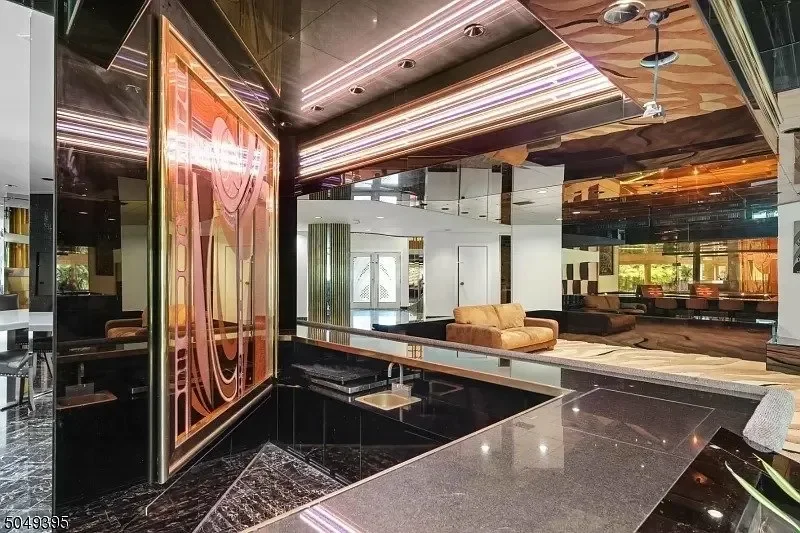
Before: The entertaining area from the bar side. Neon-lit copper panels, mirrored surfaces, dark granite, and a view into the carpeted living space beyond. A room that was designed to be theatrical, now reading as a time capsule of a design era that has passed.
Now consider what those same spaces became.
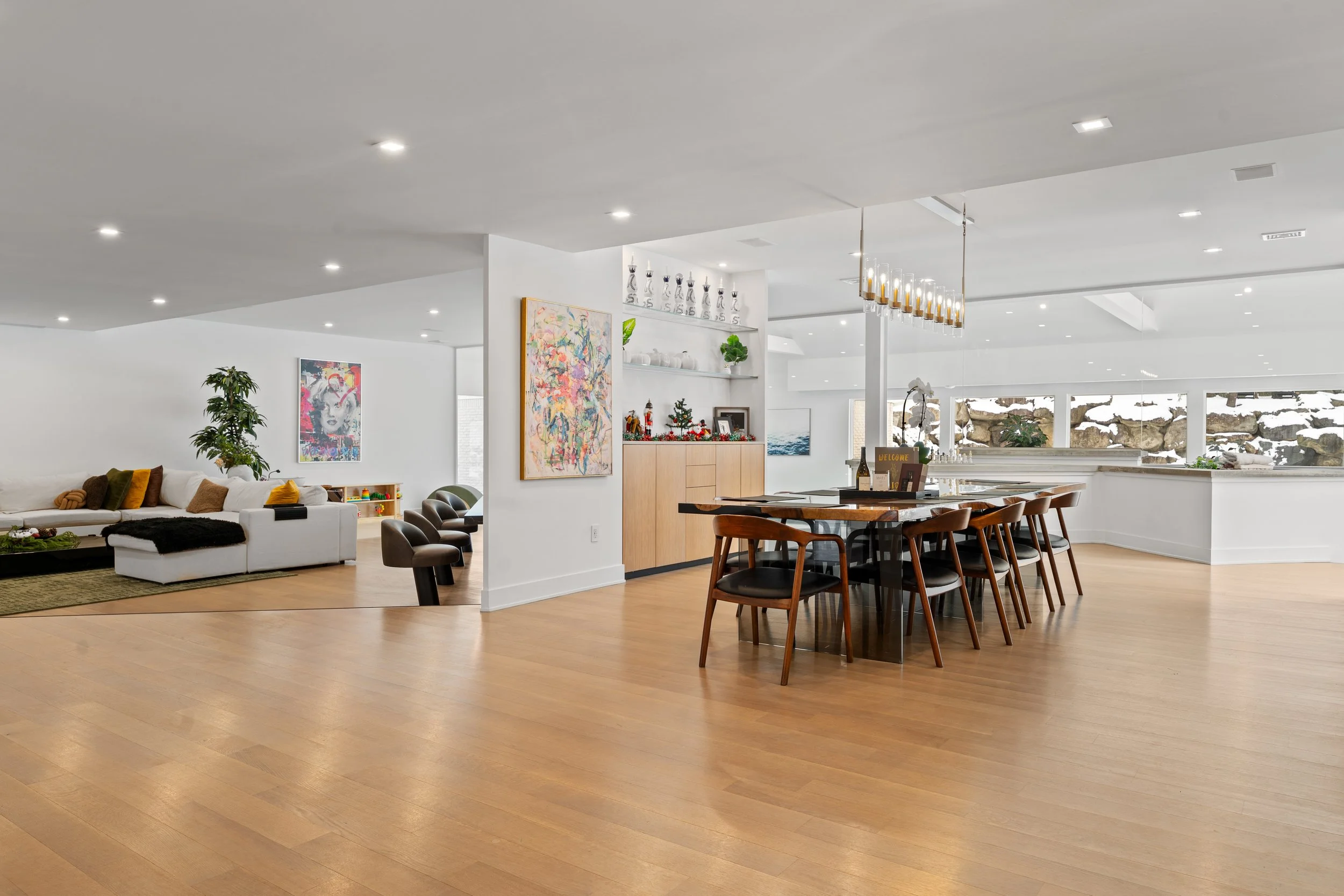
After: The open living and dining area from a second vantage point. A formal dining table, gallery-scale art, and a clear flow between entertaining zones. This angle shows what the original mirrored, carpeted entertaining level became: a space built for life, not performance.
Without the before images, the after images are beautiful but contextless. With the before images, they become proof of a builder's capacity to completely reimagine a space. That distinction matters enormously when a potential client is deciding who to trust with a seven-figure project.
Visual Strategy Is Not Photography. It Is Positioning.
Here is where most conversations about documentation go wrong.
Builders think about photography. They hire a photographer, schedule a shoot, get a set of images, and add them to a website or social feed. The images may be technically excellent. They may be well-lit, properly composed, and high-resolution.
But technical quality is not the same as strategic intent.
Strategic visual documentation asks a different set of questions. Not just "Does this room look good?" but "What should this image communicate about the builder's capability?" Not just "Is this well-lit?" but "Where does this image sit in the story of this project, and what does it need to accomplish in that position?"
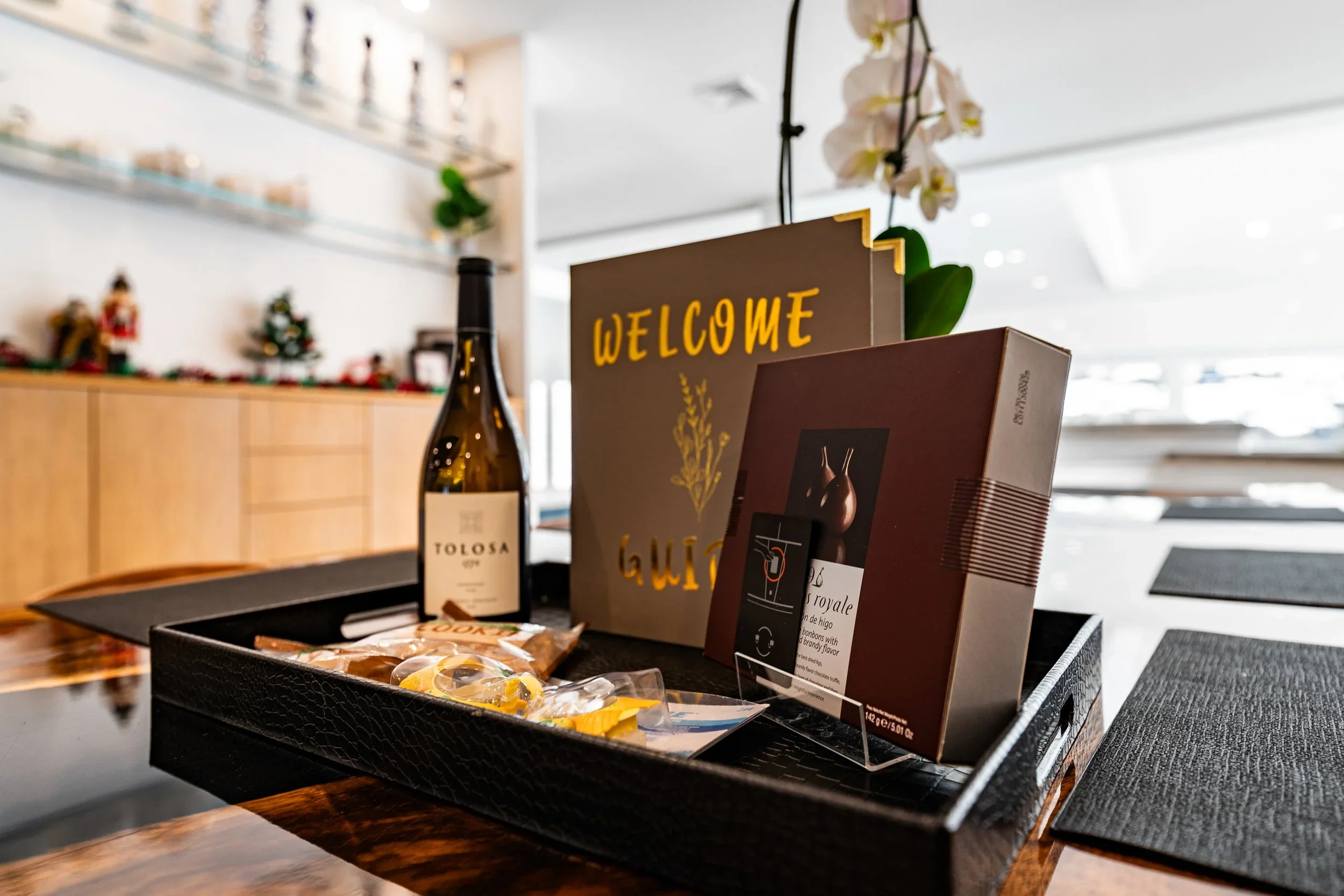
After: A curated welcome display. Wine, artisan chocolates, a branded card, and an orchid set against the clean lines of the renovated interior. This is the kind of detail image that most builders never capture, and it is exactly the kind of image that tells a prospective client everything about the standard of finish.
Consider the image above. It is not a construction photo. It is not a room shot. It is a detail image that communicates something specific: this is a space where every element has been considered. Where the finish level extends beyond structure and surfaces into the lived experience. A builder who includes this kind of image in their portfolio is telling a different story than a builder who shows only wide-angle room shots.
That is the difference between photography and visual strategy. Photography captures what is there. Visual strategy decides what to show, in what order, and for what purpose.
The Sequencing Matters as Much as the Shot
A portfolio is not a folder of images. It is a sequence. And the order in which a viewer encounters images shapes their perception just as much as the images themselves.
Think about how this Livingston project unfolds when documented with strategic intent:
The first image a viewer should encounter is the most dramatic transformation. In this case, it is the indoor pool. The before condition is striking in its datedness. The after condition is striking in its modernity. That single comparison, placed first, establishes the builder's capability immediately. It earns the viewer's attention and sets the expectation for everything that follows.
From there, the sequence moves through the home's major spaces, each one reinforcing the same message: this builder does not simply renovate. They re-envision.
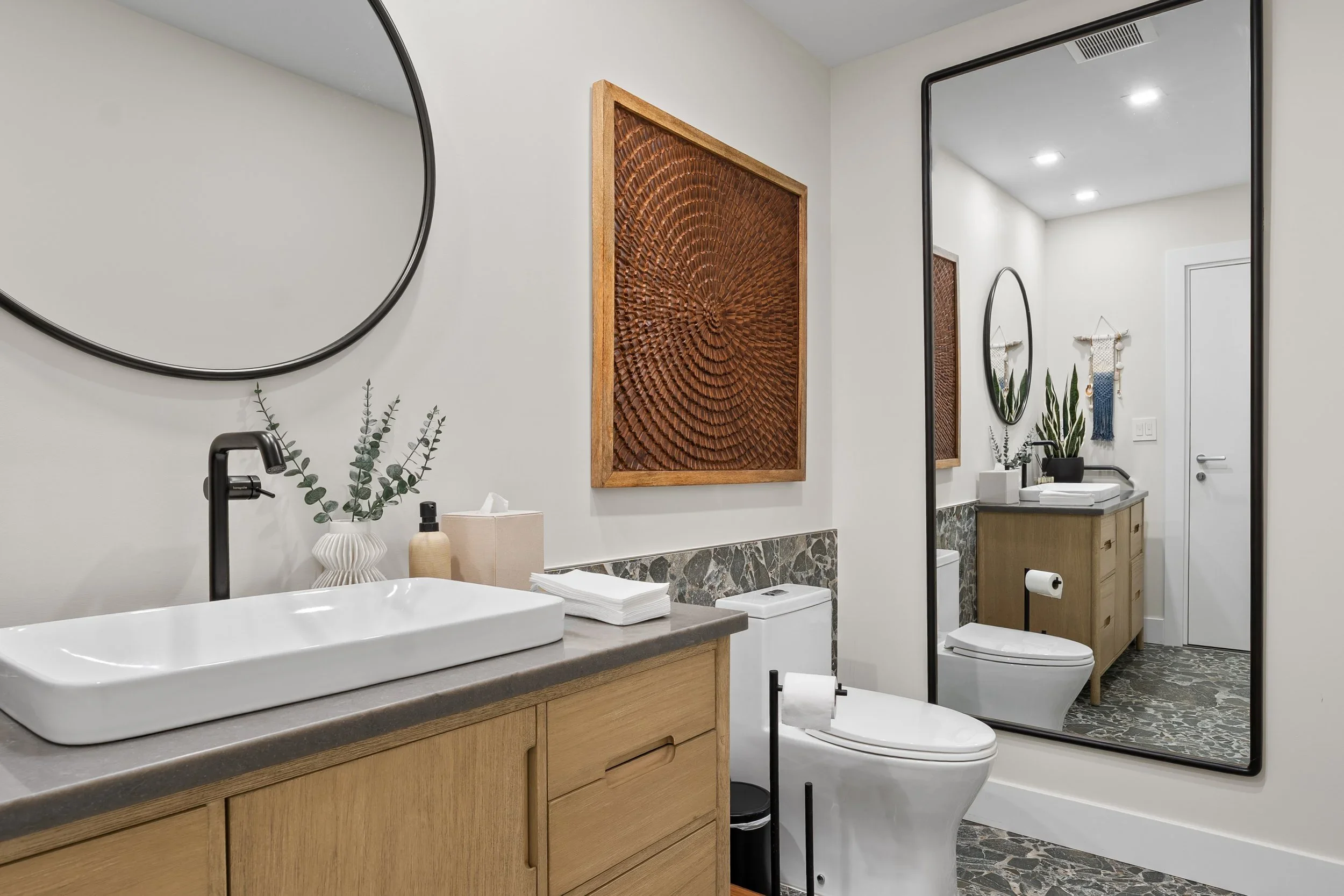
After: A refined bathroom with natural oak vanity, vessel sink, matte black fixtures, and woven sculptural wall art. The image communicates that the renovation's design standard did not stop at the primary living areas. It extended to every room a person touches.
The bathroom image above, placed after the dramatic pool transformation, serves a different function. It is not meant to be a showstopper. It is meant to show consistency. It tells the viewer that the same level of care applied to the home's most impressive feature also applied to the smaller, more personal spaces.
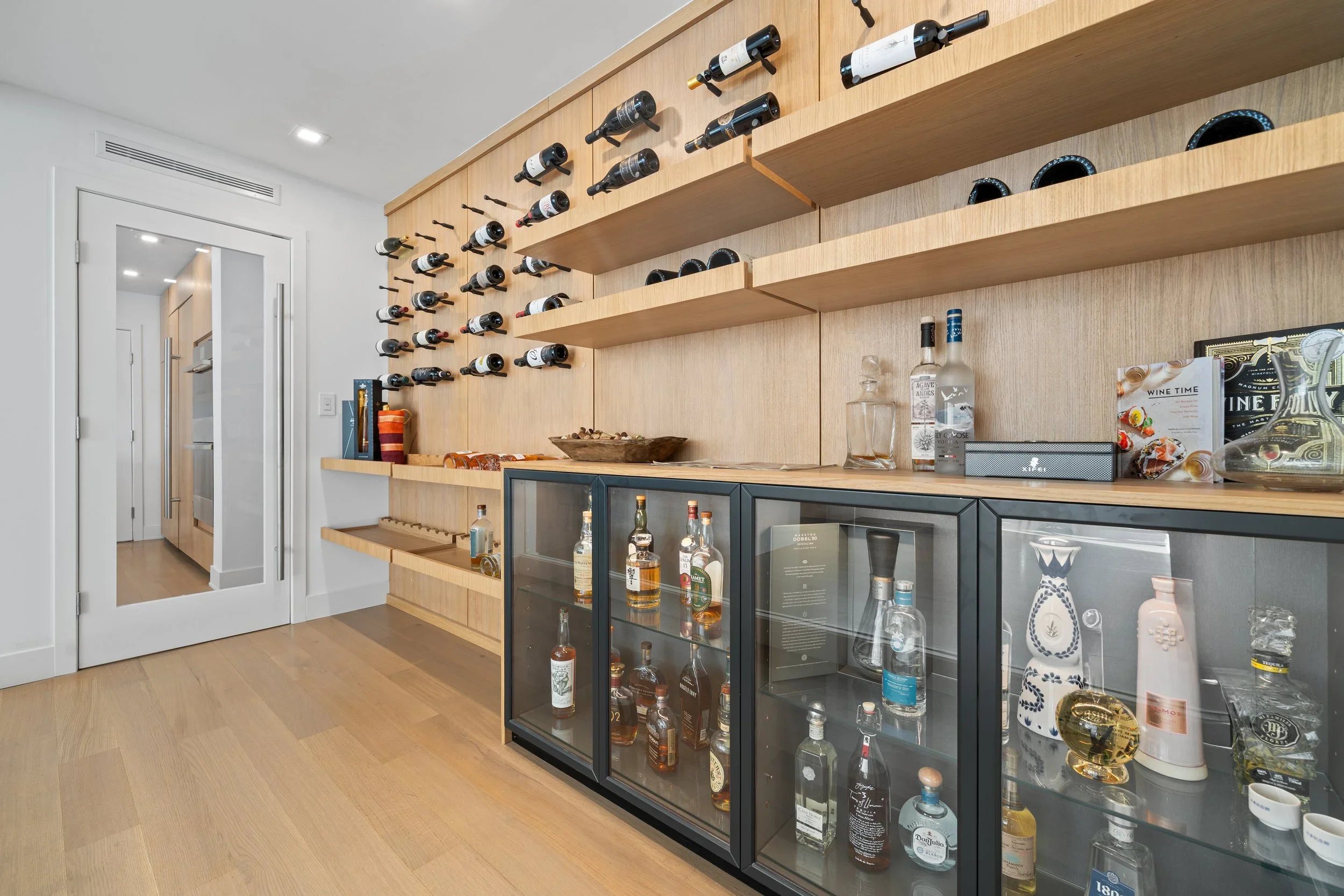
After: The wine and spirits bar. Natural oak shelving, wall-mounted bottle display, glass-front cabinetry, and a curated collection arranged with care. This is not a construction photo. It is a lifestyle image, and it tells a story about how this home is meant to be lived in.
The wine bar image tells a story about lifestyle. It says: this home was not just built to look good. It was built to be lived in at a specific level. A builder who documents these kinds of moments is giving prospective clients permission to imagine their own lifestyle reflected in the work.
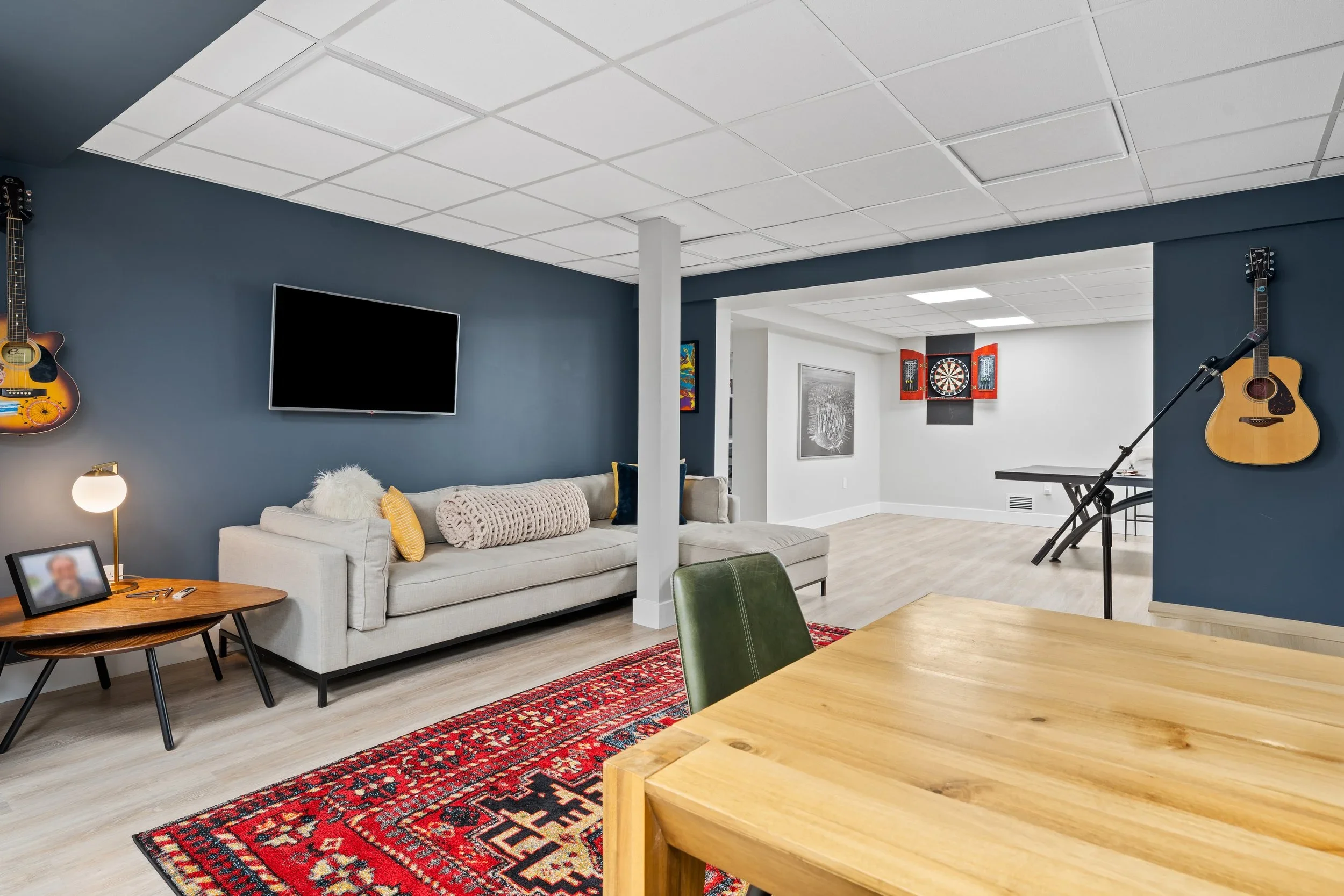
After: The lower-level recreation lounge. Deep blue walls, wall-mounted guitars, a plush sectional, an oriental rug, and an open game area visible beyond. A space with personality and warmth that proves the builder's attention did not diminish below grade.
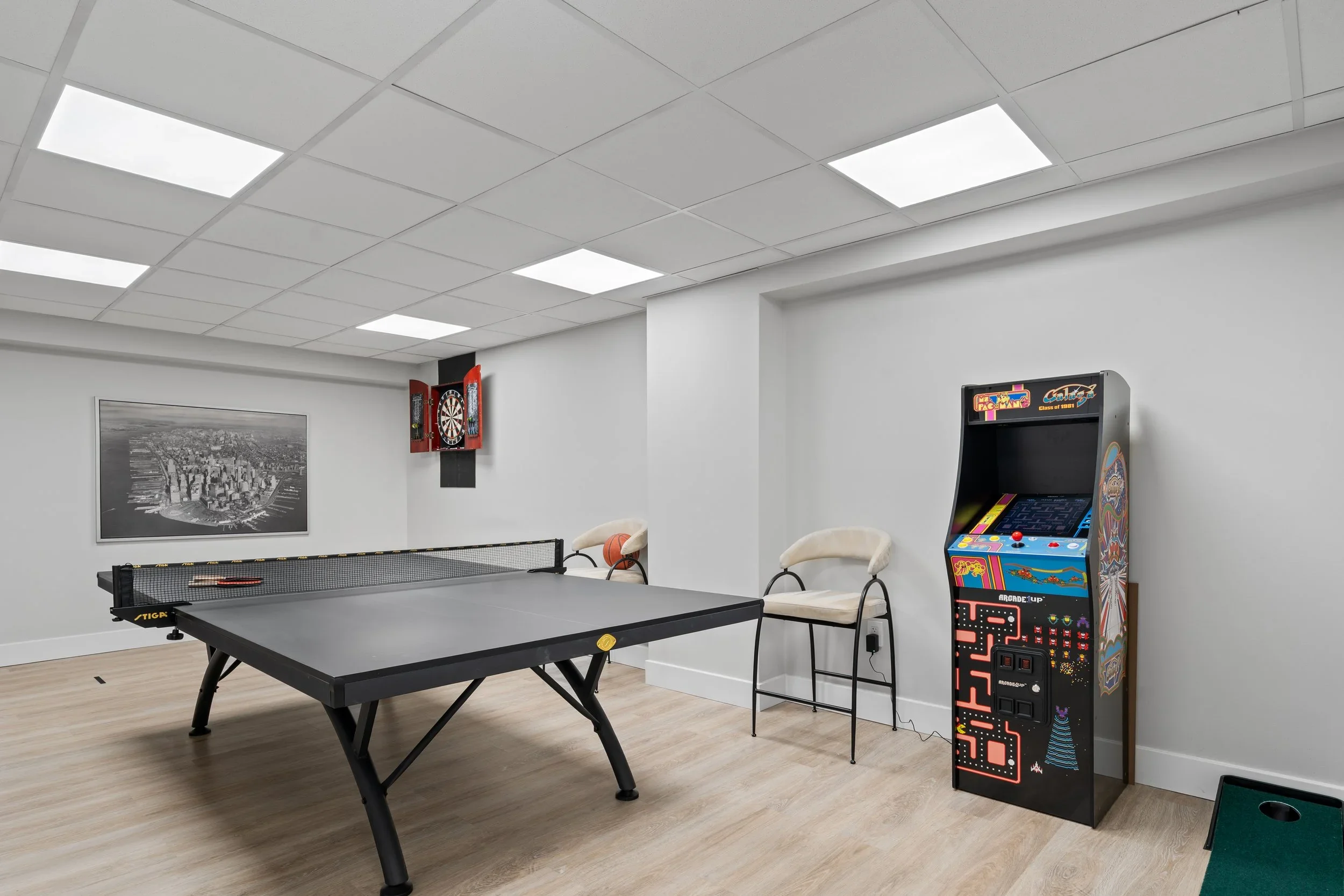
After: The game room. Ping pong, a classic arcade cabinet, dartboard, and clean white walls on light wood flooring. A space that is fun and informal but still finished to a standard that reflects the rest of the home. Consistency is the message.
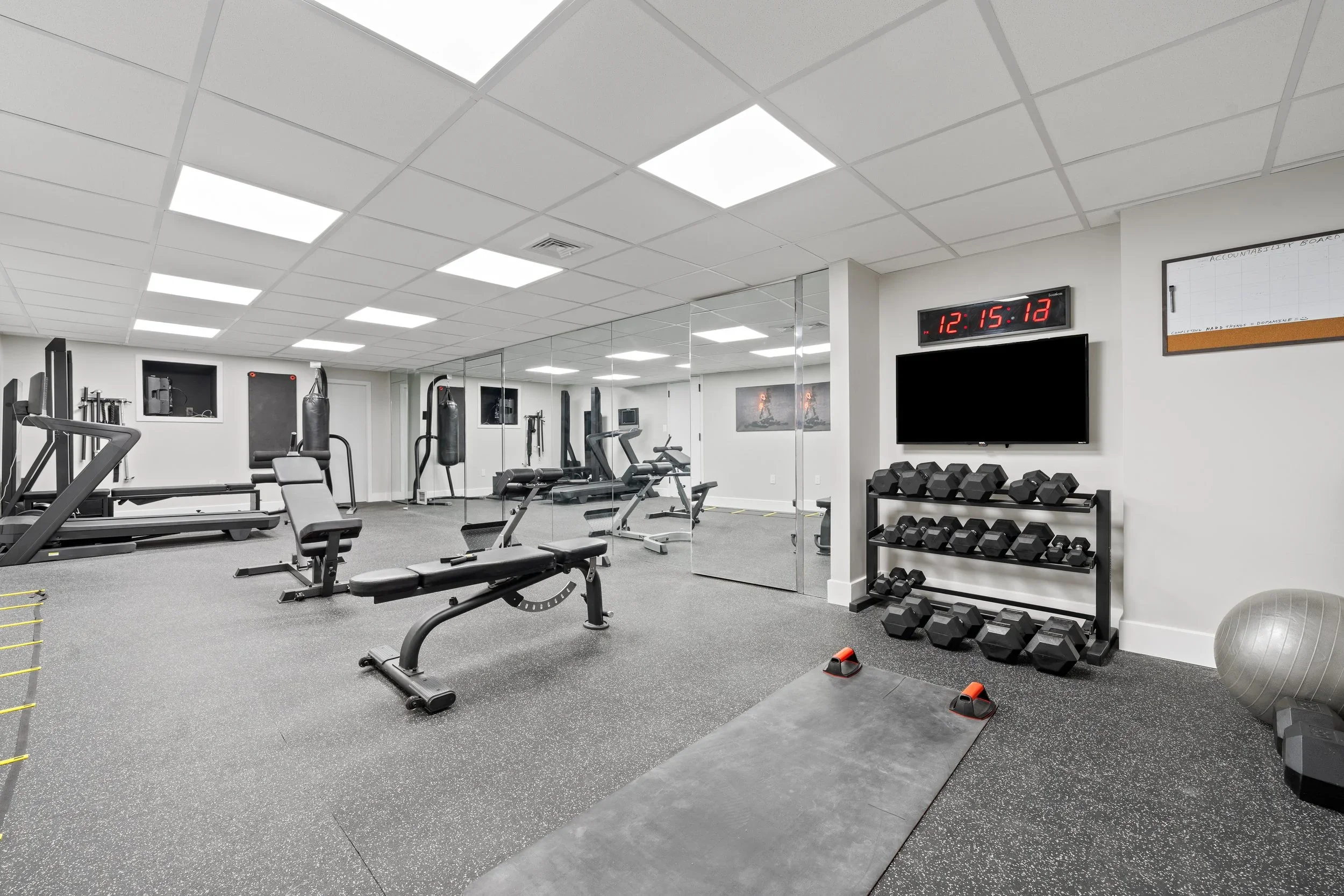
After: A fully equipped home gym with commercial-grade machines, a mirror wall, rubber flooring, and organized storage. Even in a utilitarian space, the documentation captures cleanliness, order, and intentional design. This is what consistent finish quality looks like across an entire property.
These lower-level amenity spaces might seem secondary. But in a strategic image sequence, they do critical work. They communicate that the builder's standard did not drop when the project moved beyond the main living areas. Every room, even the game room and the gym, reflects the same attention to finish, proportion, and detail.
That consistency is what separates a luxury builder from a builder who occasionally does nice work. And it is documentation that makes that consistency visible.
A Finished Project Should Work for the Builder Long After the Keys Are Handed Over
This is the point that most luxury custom builders have not yet fully internalized.
A completed project is not just a delivered product. It is a business asset. When documented strategically, a single project can serve a builder's brand for years. It can anchor a portfolio page, drive search visibility, fuel social content, inform sales presentations, and give prospective clients a clear, immediate understanding of what working with this builder looks and feels like.
But only if the documentation was treated with the same level of intention as the construction itself.
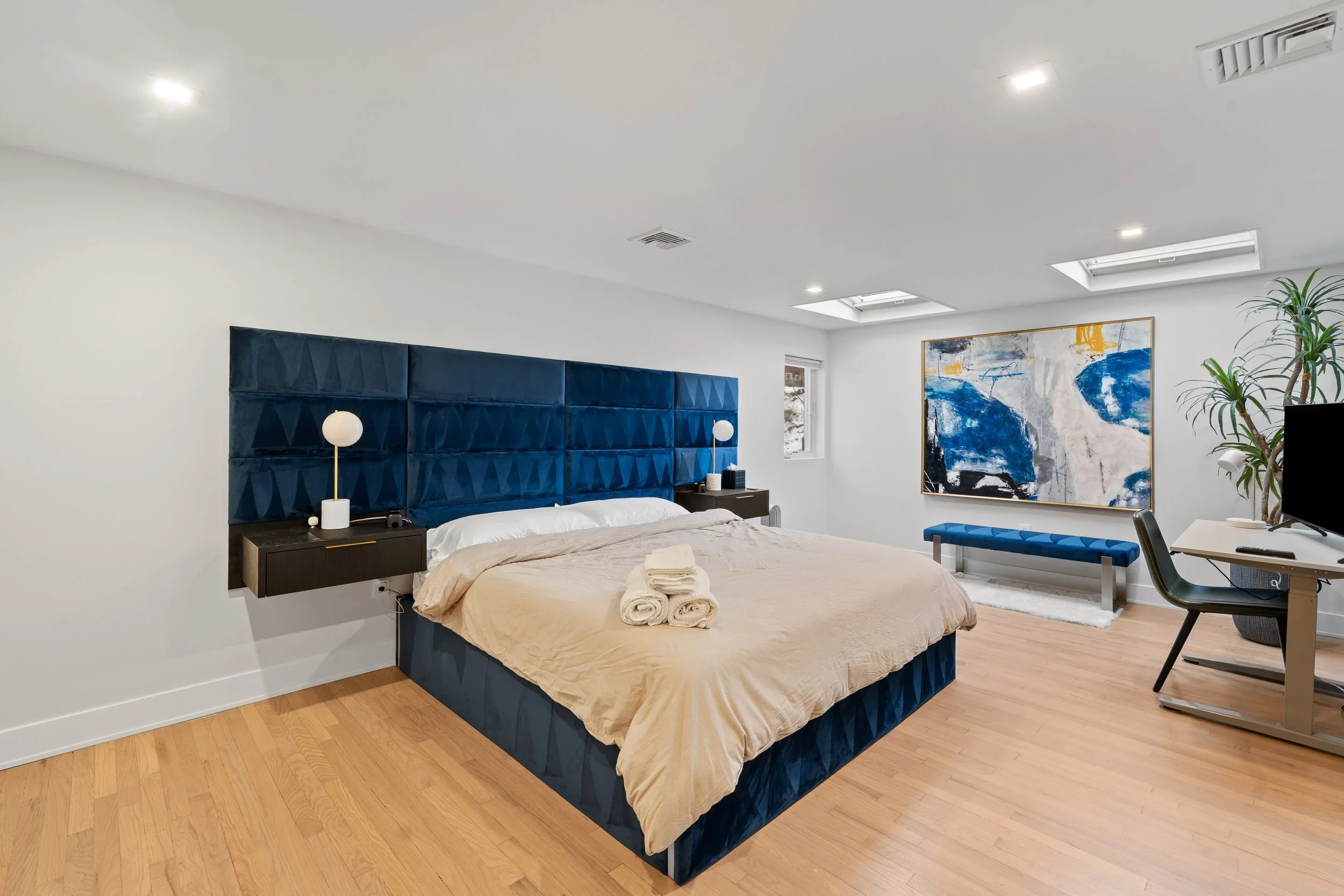
After: The primary bedroom. Deep blue velvet upholstered headboard wall, floating nightstands with globe lamps, contemporary art, and a velvet bench at the foot of the bed. Luxury communicated through material quality and proportion, not excess. The closing image in a sequence that began with transformation and ends with the feeling of home.
A bedroom image like the one above does more than show a finished room. When placed in the right context, within a properly sequenced portfolio, supported by before-and-after contrast, and framed by a narrative that communicates the builder's design sensibility, it becomes a conversion tool. It gives a prospective client the confidence to say: "This is the standard I want for my home. And this builder clearly delivers it."
That confidence does not come from a single image. It comes from a visual system, a curated, intentional collection of images that work together to communicate a coherent story about the builder's quality, range, and reliability.
The Cost of Under Documentation
Let us be direct about what is at stake.
A luxury custom builder who completes a $2 million renovation and documents it with phone photos and a quick walkthrough video has not saved money on photography. They have left a significant portion of that project's long-term value on the table.
The project will never fully serve as a portfolio anchor. It will never perform well in search. It will never communicate the full scope of the transformation. It will not give future clients the visual confidence they need to move forward. The before-and-after story will be lost, and with it, the most compelling proof of the builder's capability.
The renovation created the value. But without strategic documentation, that value stays locked inside the project. It never gets translated into authority, trust, or new business.
This is not an argument for spending more. It is an argument for spending with intention.
What This Means for Luxury Custom Builders
If you are a luxury custom builder reading this, consider the following.
You already do work worth documenting at the highest level. Your craftsmanship, your design coordination, and your ability to manage complex transformations are all of that is already present in your finished projects.
The question is whether your documentation matches your execution.
If your best project lives as a collection of 30 unsequenced photos in a Google Drive folder, it is not serving your brand. If your most dramatic before-and-after transformation has never been presented as a visual narrative, you are leaving your most powerful sales tool unused. If prospective clients are evaluating your work based on a handful of images that do not reflect the full scope of what you delivered, your perception in the market is trailing your actual capability.
The builders who win the most competitive projects in the luxury residential space are not always the ones who do the best work. They are the ones whose work is most clearly, most strategically, and most compellingly communicated.
Visual strategy is how the gap between what you build and how the market perceives you gets closed.
The Role of a Strategic Visual Partner
This is what Purple Wall Agency exists to do.
We do not simply photograph finished homes. We build visual systems that position a builder's completed work as a long-term brand asset. That means understanding the builder's market, their ideal client, and the specific story each project needs to tell. It means documenting with before-and-after intent from the start. It means sequencing, selecting, and curating images so they work together as a narrative, not just a gallery.
It means treating every finished project as an opportunity to strengthen the builder's authority in their market.
The Livingston property is one example. But the principle applies to every luxury custom home builder who takes pride in their work and wants the market to understand what makes them different.
Your projects already tell a story. The question is whether that story is being captured, shaped, and communicated in a way that does justice to the work you do.
If it is not, that is not a photography problem. It is a strategy problem. And it is one worth solving.
Pre-renovation images sourced from the original MLS listing via Zillow. Post-renovation photography by Purple Wall Agency.
Purple Wall Agency is a luxury brand strategy firm for custom home builders. We help builders translate exceptional work into visual authority, market positioning, and long-term brand equity. To learn more about how we work, visit purplewallagency.com.
